
A rat seen in a communal bin store is a building management problem as well as a pest observation. One resident may report a sighting, another may notice torn bags, and the collection crew may find access blocked. Without a shared record, each report can trigger a separate clean or treatment while the same food source and entry route remain. A property manager needs one timeline, safe waste arrangements and an inspection covering the store and its connections to the block.
Capture the first reports clearly
Ask the person reporting activity for the date, time and exact place: inside the store, by the door, behind a bin or along the path. Request photographs of droppings, damaged bags or a gap only when they can be taken without approaching an animal or handling waste. Record which bins were overflowing and whether the door closed. Keep observations separate from guesses about where the animal came from.
Give residents a single reporting route, such as the managing agent’s maintenance address. Avoid circulating photographs of individual residents or blaming a flat for the problem. A concise notice can ask people to place waste inside the correct containers, close lids and report fresh signs. It should also tell them not to move bait, traps or contaminated material. The manager can pass a combined log to the pest contractor rather than making residents repeat the story.
Record the condition of the store at different points in the collection cycle. An area that looks orderly just after emptying may overflow before the next scheduled pickup. Note the number and size of containers, whether residents can reach them, and any broken wheels or lids.
Restore usable waste storage
Check whether collection access is blocked, bins are damaged, lids will not shut, or refuse is piled outside containers. Arrange safe clearance by the appropriate waste contractor. Do not expect caretakers or residents to handle potentially contaminated material without suitable procedures. If a collection was missed, report it promptly and establish where new bags can be stored securely until the next visit. The aim is to remove accessible food without creating a second obstruction.
Southwark’s guidance for managers of flats stresses secure bin storage, collection crew access and reporting missed collections before rubbish accumulates. Exact collection rules differ by borough, so confirm the contract for this block. Peterborough City Council’s shared bin advice explains how overflowing bins, bags beside containers and blocked access can lead to missed collections and attract vermin. Those are operational issues that a pest treatment alone cannot solve.
Survey the store and connected spaces
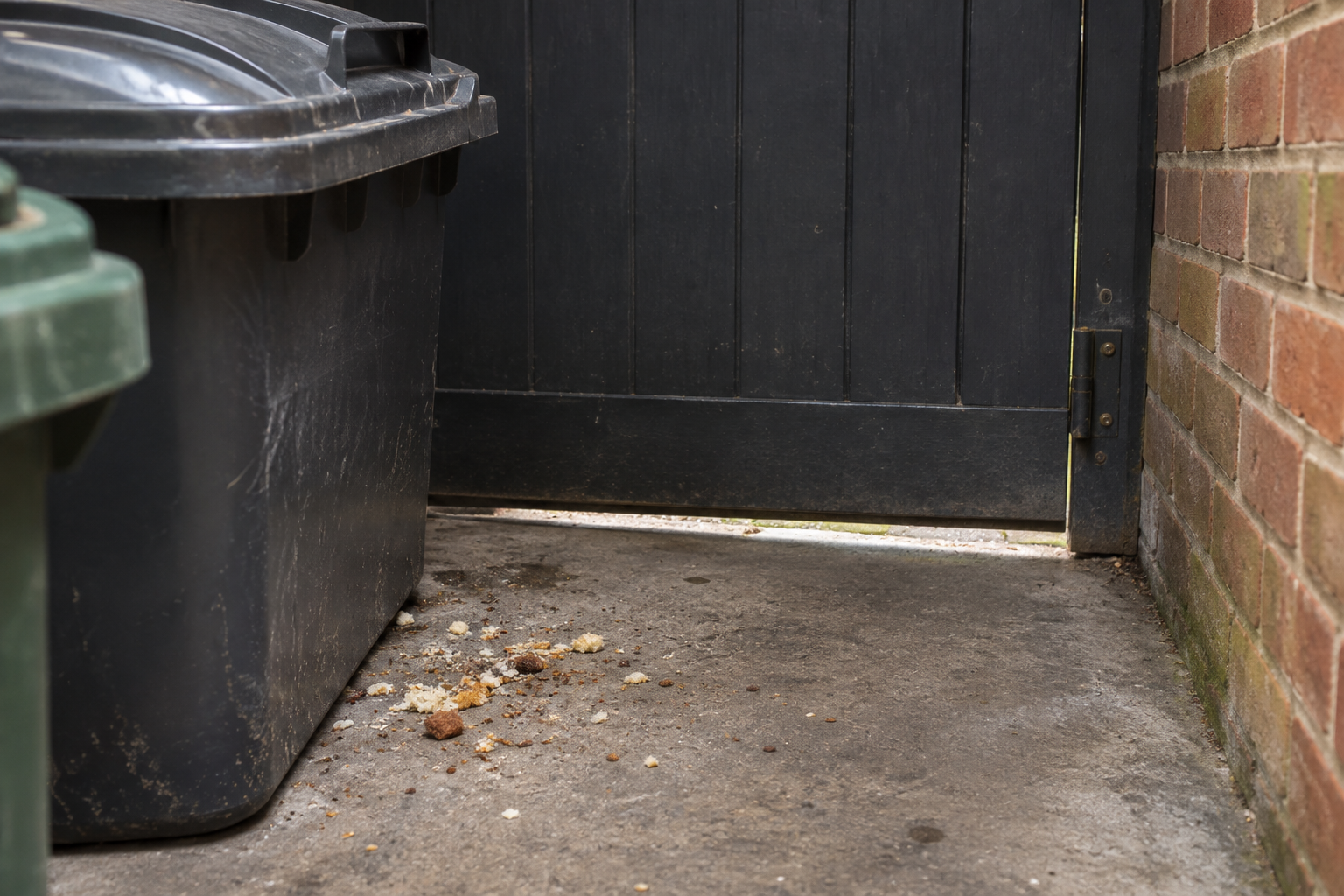
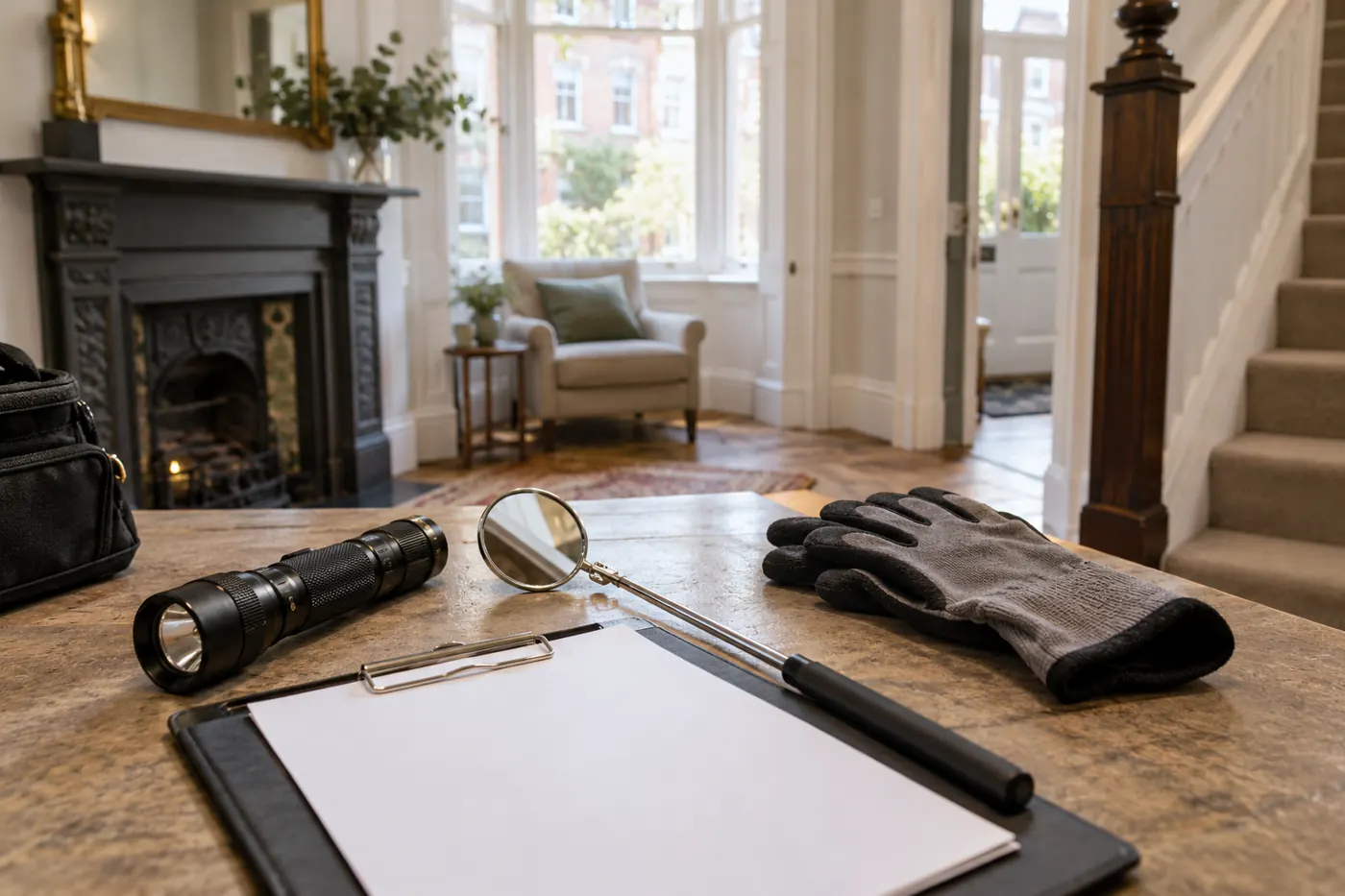
The pest inspector should see the bin store during normal access, not only after a deep clean has removed every sign. Photograph the layout first. Ask for a survey of the door threshold, wall edges, drains or service penetrations, nearby planting and the route toward the building. Droppings or gnawing in one corner do not automatically show the entry point. The contractor should explain which signs are fresh, which species is suspected and what evidence supports that view.
Check whether adjoining cupboards, cycle stores, plant rooms or basement corridors are connected. A narrow opening can allow movement between areas even when the bin store door is secure. Access to those spaces may require keys, a caretaker and permission from another responsible party. Arrange them before the visit. If the inspector cannot enter a relevant space, record that limit and schedule a return rather than treating the survey as complete.
The Royal Borough of Kensington and Chelsea’s rats and rubbish guidance recommends secure refuse storage, enough bins and a store door without small gaps. It also directs tenants to inform a landlord or managing agent about rodents in a refuse area. The block’s own duties and local collection rules should be checked separately; the useful operational lesson is that waste capacity and building access both belong in the response.
Assign actions to named owners
Split the work into tasks with dates. The waste contractor may clear loose rubbish and confirm collection frequency. The property manager may repair a damaged door, provide enough usable bins and coordinate resident notices. The pest contractor surveys activity, proposes control and records follow up. A building contractor may address structural gaps after the route has been established. Avoid asking the pest contractor to repair a fire door or asking a cleaner to decide where rodenticide belongs.
Use a simple action log: issue, location, owner, target date and evidence of completion. Include photographs before and after repairs. If the bin store is shared with a commercial unit, identify who holds the waste contract and who controls the door. Confirm whether the store can remain usable during work. A temporary arrangement that forces residents to leave bags in a corridor can create another access and hygiene problem.
Check that the agreed repair does not obstruct waste collection or emergency access. A tighter door, new mesh or repositioned bin can solve one opening but make use impractical. Ask the person responsible for the building to review the proposed layout. Keep the contractor’s photographs and measurements so the same gap is not rediscovered at a later visit without a record of what changed.
Treatment, proofing and resident communication
Ask for a written plan that covers the identified activity, safe placement and monitoring of any control measures, the expected visits and proofing recommendations. Rat control and mouse control can address confirmed species, while pest proofing is relevant to validated access gaps. Do not seal a possible active route without a species and access assessment. Do not place unmonitored bait where residents, pets or collection workers can encounter it.
Tell residents what has changed in practical terms: where to put waste, whether the store will be closed temporarily, how to report new signs and whom to contact if bins are full. Avoid naming a flat as the source without evidence. Offer clear instructions to cleaners and collection staff as well, because they may see the first new sign after treatment. A report that includes a date and exact bin is more useful than a general statement that rats are back.
Check the outcome beyond a single visit
After clearance and treatment, inspect the store on a regular schedule and after collection days. Check lid closure, loose waste, door operation and fresh droppings. Review whether bin capacity matches actual use, especially after holidays or tenancy changes. A quiet week immediately after cleaning does not prove the route has been closed. The contractor should set a follow up point and explain what would trigger another inspection.
If activity persists, compare the new evidence with the original map. A different corner or a new gap may change the proposed repair. The general home rodent prevention guide covers household measures; a shared bin store needs coordination across residents, cleaners, collection crews and building management. One accountable log makes that coordination possible and gives the next inspection something testable.