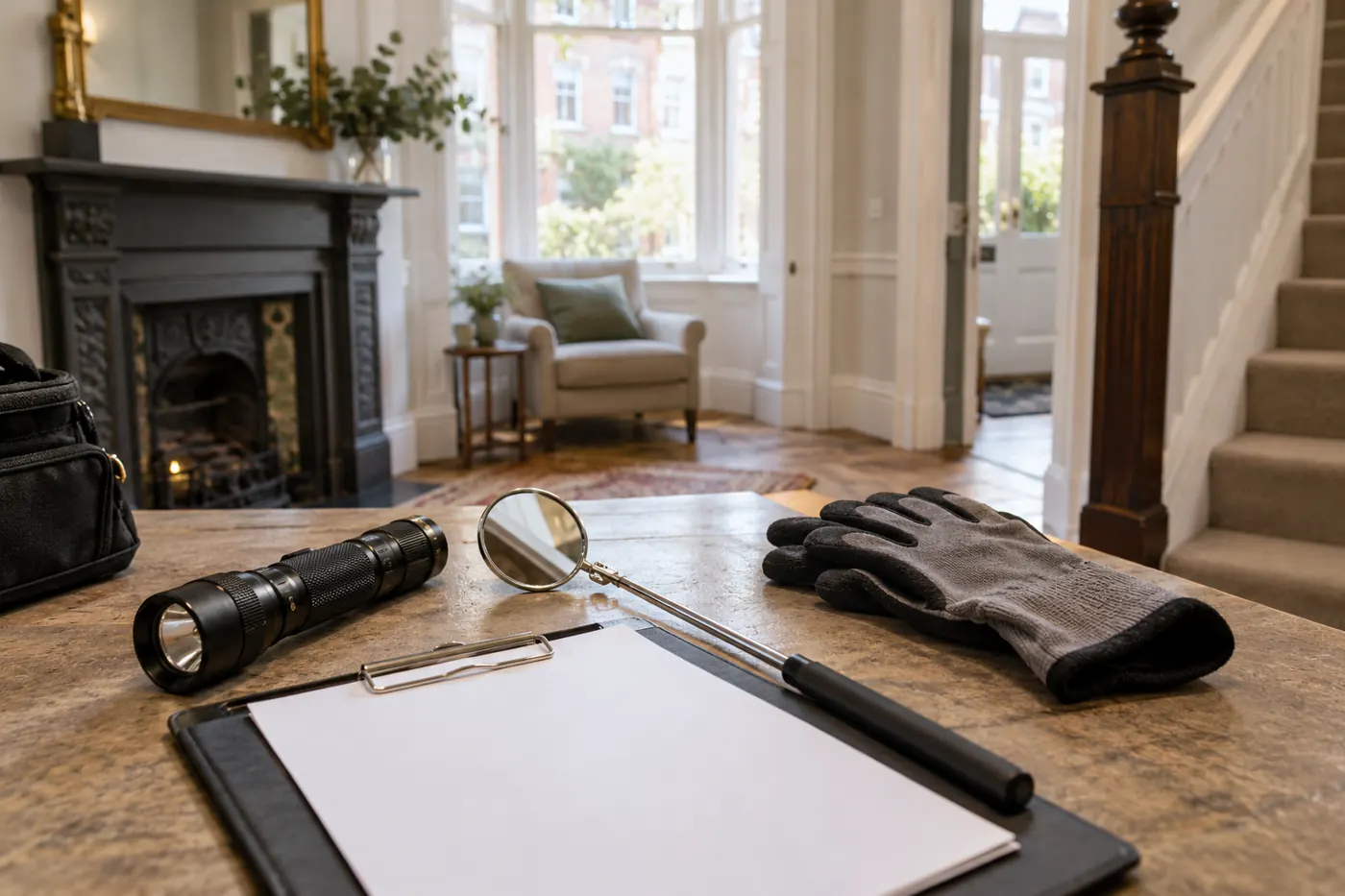

Finding mouse droppings beside stored food creates two separate jobs: protect people from potentially contaminated items, and preserve enough information to locate the pest route. Do not return a suspect packet to the shelf while you decide what happened. Keep children and pets away from the cupboard, photograph the scene, and distinguish food that has been opened or gnawed from containers that still appear intact. If you are unsure whether food was exposed, treat the uncertainty seriously rather than relying on appearance alone.
Pause use of the affected cupboard
Stop using food and utensils in the immediate area until you have assessed the signs. Note the date, cupboard and shelf, and photograph droppings, damaged packaging and any spilled contents. Take a wider view before moving packets so the original pattern is recorded. If there is an open bag of flour next to droppings, it deserves different consideration from a sealed glass jar on another shelf. Do not taste or smell food to decide whether it is safe.
Keep potentially affected items separate from clean stock. Use a bag or box that can be closed, and avoid carrying loose packets through food preparation areas. If a child or vulnerable person has already handled the material, note what they touched and seek appropriate health advice if symptoms or exposure concerns arise. A household discovery calls for proportionate caution; it does not justify assuming every item in the home is contaminated.
Decide which food cannot be kept

Discard food in an opened, punctured or gnawed package, and any food with visible droppings or other evidence of rodent contact. Do not remove the damaged outer layer and use the rest. Local authority mouse advice from Hastings Borough Council states that contaminated food should be disposed of. Coventry City Council’s guidance for food businesses likewise advises throwing away nibbled food or food that may have been contaminated by droppings or urine. The business guidance is a useful caution but does not replace any specific rules applying to a food business.
An apparently sealed container needs its own assessment. Check whether the lid and body are intact, whether droppings are on its exterior, and whether the material can be safely cleaned without exposing the contents. A visibly damaged seal or uncertain closure is a reason to discard the food. Do not place a dirty container back among clean items. When in doubt, seek food safety advice rather than inventing a rule based on the container material alone.
Pay attention to multipacks and storage boxes. A clean-looking inner packet may have been stored inside a chewed outer carton, so examine its own seal and the location of any debris. Do not assume that a date label or unopened appearance proves protection. If several products were mixed in one open basket, note which were directly exposed. Dispose of questionable items in a closed waste container, then wash the container or surface used to carry them.
Document without keeping hazardous samples
Make a short inventory of discarded items: product, package type, location and reason for disposal. Photographs of damage are usually enough for an inspector; there is rarely a need to store a packet containing droppings. If you rent, the record can help explain the extent of the problem to a landlord. For a food business, follow the site’s food safety procedures, record affected stock and contact the responsible manager promptly.
Keep a note of other signs in the kitchen. Are droppings present only on one shelf, along a wall edge, under the sink or behind a plinth? Was a packet chewed from the side facing a pipe opening? A detailed location is more useful than simply saying that mice were in the pantry. Avoid treating the number of pellets as an exact measure of how many animals are present.
If you need to make a claim to a landlord or insurer, keep receipts or photographs of the discarded food where appropriate, but do not retain contaminated stock merely for proof. Write down when the cupboard was last used without signs and when the damage was first noticed. This timeline helps distinguish a recent event from an older discovery. It also gives a pest professional a sensible starting point for monitoring and follow-up.
Clean the area without scattering dust
Do not sweep or vacuum dry droppings. Keep the cupboard out of use, wear suitable gloves and follow current public health guidance for safe cleaning or arrange professional help if the material is extensive. Clean and disinfect affected surfaces using products as directed on their labels, and avoid mixing chemicals. Wash hands after handling waste and before preparing food. Porous items or equipment that cannot be cleaned adequately may need replacement.
Take care with food preparation tools stored near the signs. A pan on a separate clean shelf is not the same as an uncovered utensil lying among droppings, but both should be assessed before reuse. If contamination reached a worktop, cutting board or other contact surface, address that surface before preparing meals. If you manage a catering premises, use the business’s documented procedure and seek food safety advice; household steps alone are insufficient.
Find how the mouse reached the food
Once immediate food decisions are made, map the likely route. Look for gaps near pipe runs, cabinet backs, floor edges and doors without dismantling fixed units. Photograph any accessible opening and describe what is hidden. Bromley Council’s rodent guidance for food businesses lists damaged packaging, droppings and smear marks among signs worth monitoring. The guidance is written for businesses, but its evidence categories help structure a focused, safer household inspection.
A small gap behind one cupboard may be an internal passage rather than the way into the building. Do not seal it immediately if activity remains and the wider route has not been checked. For a focused inspection, mouse control in London can assess the signs. Pest proofing is relevant once the entry point and repair detail are identified. If the suspect route follows a shared riser, a landlord or managing agent may need to coordinate access.
Restock with a monitoring plan
After cleaning and an agreed inspection, restock with intact food in well-closing containers and keep the shelf easy to inspect. Record the date of cleaning. Check the same locations for new signs over the following days rather than moving every item repeatedly. If droppings reappear, tell the inspector exactly where and when. A clean cupboard is useful, but it does not prove the entry route has been resolved.
Ask what follow-up is needed, whether any hidden space requires access, and how treatment will be checked. Do not place loose bait beside food. The existing general rat and mouse prevention guide covers broader housekeeping; this article addresses the immediate food decision and the record needed for a targeted survey. The goal is to remove unsafe stock, restore a clean storage area and prevent the same pattern from returning.