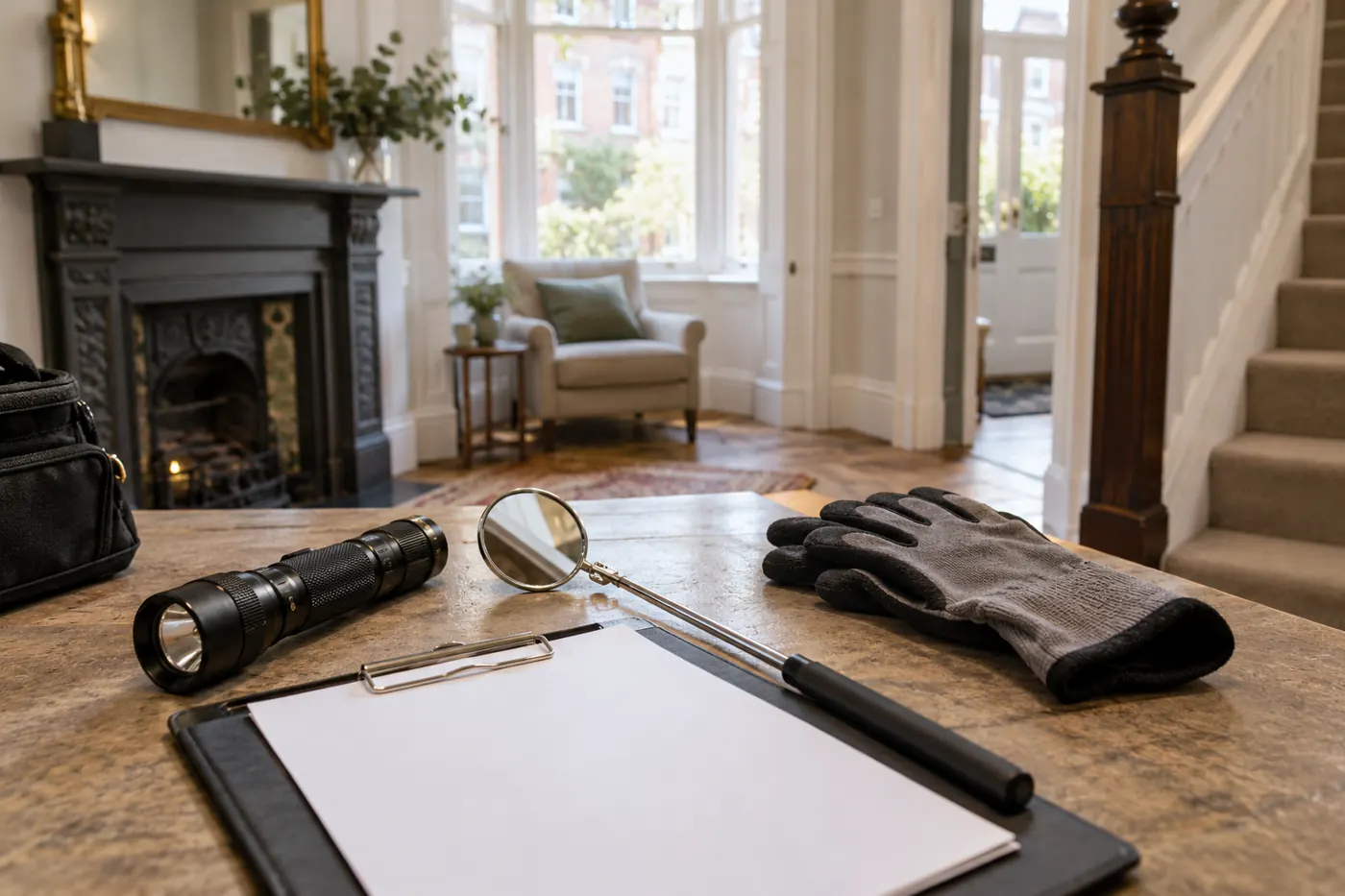

A mouse seen disappearing below a kitchen cabinet does not tell you where it entered the property. The space behind fitted units can connect a sink, dishwasher, cooker and several service holes. A gap in the plinth may be only the place where the animal becomes visible. A useful response is to map the signs, trace likely connections and plan access for an inspection before sealing the first opening you notice.
Start with a fixed reference point
Record the date and the exact place of the sighting. Was the mouse beside the sink unit, behind the bin, or near a door? Photograph the whole run of cabinets before moving objects. Then note any droppings, gnawing, food damage or marks along the floor edge. Keep a separate note for each location. A few pellets in one cupboard and scratching behind another may be related, but the connection still needs to be established.
Do not sweep or vacuum droppings to make the pattern easier to see. Keep people and pets away from affected food and preparation items. If packaging is damaged, set it aside and follow suitable food hygiene advice. Photograph evidence before cleaning it safely. For a substantial accumulation or a location beside wiring or ventilation, ask for professional help rather than reaching into a concealed void.
Draw the cabinet run
Make a simple sketch from above. Mark the sink, cooker, dishwasher, fridge, bins, external wall and doors. Add arrows showing where each sighting occurred, but label them as observations rather than a confirmed mouse route. Note where pipes enter the wall or pass between cabinets. The waste pipe beneath a sink may disappear behind a back panel; a heating pipe may continue through a neighbouring unit. Mark the point you can see and the part that remains hidden.
If a removable plinth is designed to come off easily, ask whether it can be taken off safely for an inspection. Do not prise fixed joinery apart, pull a plumbed appliance forward or reach behind a cooker. The inspection can be planned with the right access and with the owner or landlord’s permission. In a rental flat, record which units are fixed and who can authorize their removal.
Before a visit, check whether you have installation drawings, a photograph from a recent kitchen repair or details of where the water supply enters. These can reveal hidden connections without dismantling anything. If access to an appliance requires a tradesperson, arrange that in advance. An inspector can then spend the appointment examining evidence instead of simply guessing what actually lies behind an immovable panel.
Distinguish a passage from an entry point
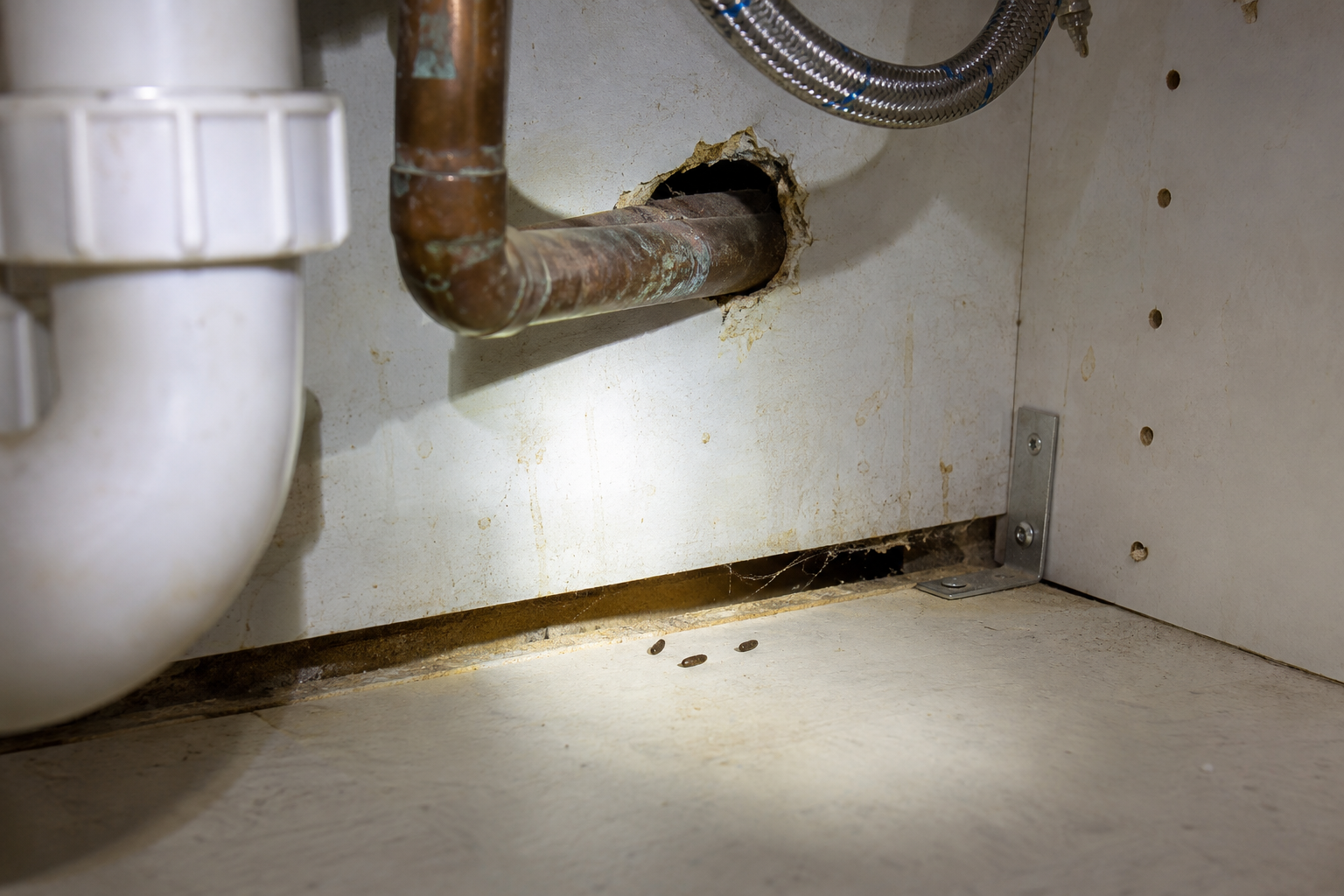
A mouse may travel along a wall beneath several cabinets before emerging through one convenient gap. The British Pest Control Association’s house mouse advice notes that mice can use very small openings and recommends checking around pipes and low-level gaps. The gap visible in your kitchen is worth recording, but it does not prove that the animal entered the building there. An external opening, floor void or shared service riser may connect to the cabinet space.
Look for a sequence of evidence. Droppings in multiple adjacent units, marks near a pipe penetration and a repeated sighting at one end of the run suggest a route to test. A single old pellet behind a dishwasher has less value without a date or another fresh sign. Do not identify the species only from the size of one dropping. An inspector can compare the signs, check inaccessible sections and decide whether other pests could explain them.
Check food and water without hiding evidence
Store dry food in secure containers and clear ordinary spills around the bin and under accessible shelves. Check that the bin lid closes and that crumbs do not collect beneath the plinth edge. Also note leaks or condensation around the sink and dishwasher. These conditions can support activity, but removing them does not by itself close an access route. Avoid emptying every cupboard at once; label anything you move so the original distribution of signs remains clear.
Do not place loose poison beneath kitchen units. An inaccessible treatment can create risks for children and pets, and it may leave an animal in a void that cannot be checked. If traps or bait are proposed, ask where they will be placed, how they will be monitored and what access is needed. A treatment plan should connect the evidence, the likely route and the follow-up checks.
Plan proofing at the right stage
Sealing only the cabinet back can make a kitchen look tidy while leaving an active infestation in the wall or floor. A BPCA professional discussion of stubborn mouse infestations specifically warns against relying on gaps behind kitchen units as the whole solution. The route into the building and the population already inside need assessment. Ask which gaps are confirmed entrances, which are internal passages, and how each proposed repair will be checked.
Proofing must also preserve ventilation, drainage and service access. Foam or improvised material at a pipe hole may fail or obstruct a repair. If a kitchen shares a riser with another flat, the managing agent may need to coordinate access. The pest proofing service can address building openings after the route has been identified; a cabinet fitter or plumber may be needed for a service detail.
Give the inspector a useful brief
Share the sketch, dated photographs and a list of places you could not see. State whether the activity appears in one room or elsewhere in the property. Mention recent plumbing work, a leak, damaged packaging and any noises at night. Ask whether the survey covers the entire cabinet run, the outside wall and connected floor or service voids. For a suspected mouse problem, mouse control in London describes the relevant service.
After the visit, request a written summary that separates confirmed evidence from suspected routes. It should identify any access needed for treatment or repair and say how new activity will be monitored. If the property is rented, send the findings to the person who can arrange work on fixed units and communal fabric. A neighbouring tenant may need a separate inspection if the route crosses shared space.
Monitor the same points
Once affected surfaces have been cleaned safely, check the mapped points on a regular schedule. Record fresh droppings or sightings with dates and locations. Do not move a monitoring point every day; a stable comparison shows whether activity continues in the same place or shifts after a repair. If signs persist, give the update to the inspector rather than assuming the first visible gap was missed.
The existing general rat and mouse prevention article covers wider housekeeping. This kitchen map answers a narrower question: how the concealed space behind fitted units connects visible signs. A clear sketch, safe photographs and a tested route make treatment and proofing more precise than a quick seal at the first hole.