
Finding droppings in a kitchen calls for two immediate steps: keep people and food away from the affected spot, then record exactly where the material appeared. A photograph and a note of the cupboard, floor edge or worktop involved will help you explain the problem. Avoid sweeping or vacuuming the droppings. The next job is to work out whether the signs point to active rodent movement and where an inspection should begin.
Start with the affected food and surfaces
Close the cupboard or keep the area out of use while you assess it. If droppings are beside open food, food preparation equipment or a child’s items, keep those items separate until you can decide what can be safely cleaned and what must be discarded. Do not put questionable packaging back among clean stock. A torn packet is a clearer concern than a sealed container on a different shelf, but a photograph can help you discuss the distinction with a professional.
Check whether there are signs elsewhere before moving anything. In a London flat, a few pellets beneath the sink may be the most visible clue, while the route runs behind fitted units. Moving all the contents at once can hide the original pattern. Note the date, room and exact position; then make a short list of other places that need a visual check.
What the droppings can and cannot tell you
Size and shape can help narrow the possibilities, but they do not provide a certain identification on their own. Mouse droppings are usually smaller than rat droppings. Colour alone is a poor clock: lighting, moisture and the surface beneath a dropping can change how it looks. If the pieces differ markedly in size or you also find insect debris, avoid assuming that one animal explains everything.
Look for a pattern rather than an isolated specimen. Are the droppings concentrated along a wall edge, behind the bin, around a pipe opening or under an appliance? A line of marks may suggest a repeated route. Fresh marks in a previously cleaned and monitored place are stronger evidence of current activity than an undated discovery in a cupboard nobody has opened for months. Leave difficult identification to an inspection when the evidence is unclear.
Make a useful kitchen map

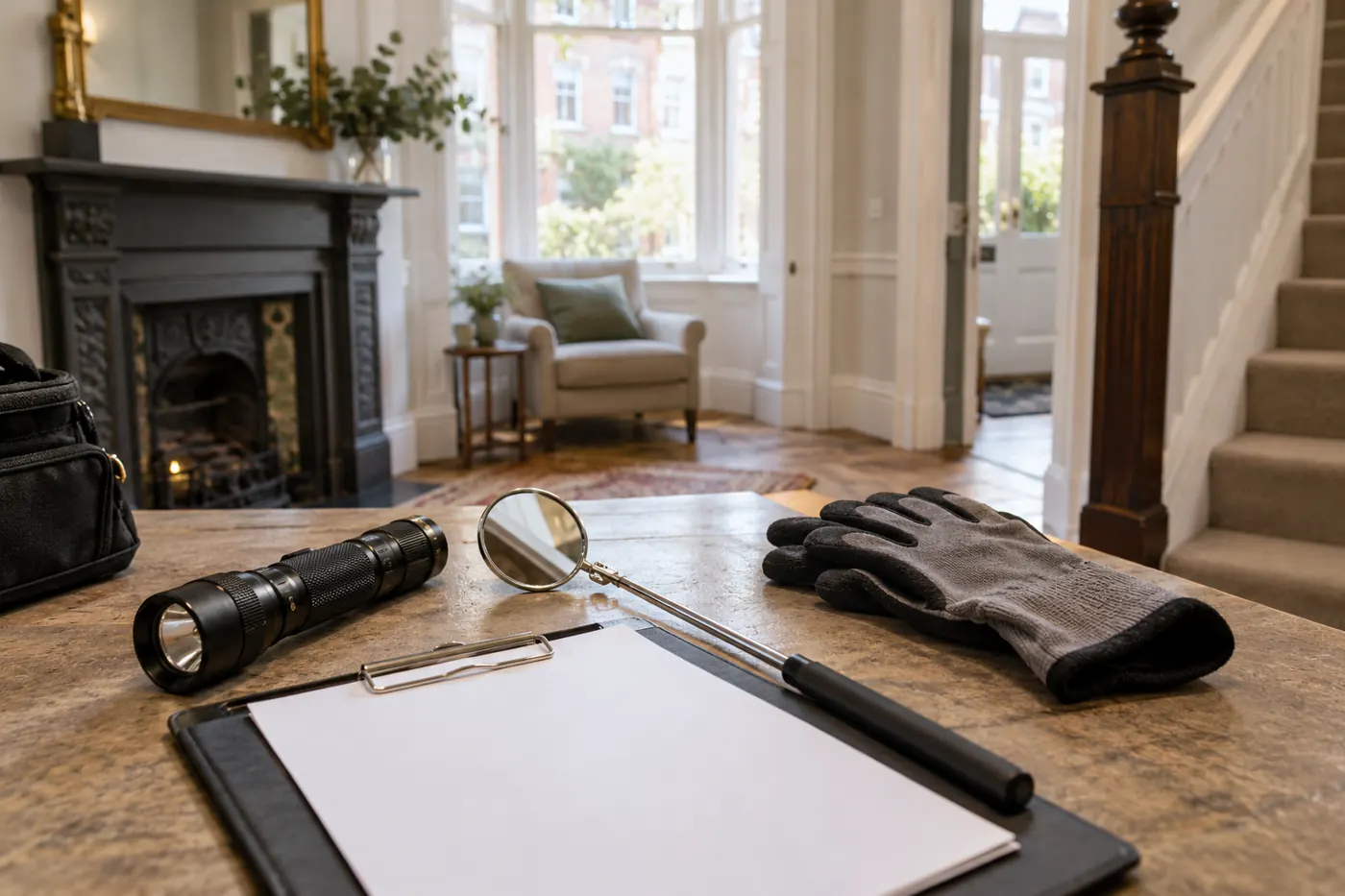
Work from the discovery point outwards without pulling heavy appliances or reaching into electrical spaces. Check the floor edges beneath nearby units, the inside of the adjacent cupboard and the area where pipes pass through a wall or cabinet. A torch can reveal gaps and gnaw marks, but never place a hand into a hidden void to feel for an animal or a trap.
Record the position of each sign on a simple sketch or in a series of labelled photographs. Include the sink, dishwasher, cooker, bin and any door to an outside area. If there is an external wall, note whether the marks are on that side of the kitchen. In a converted terrace, the relevant opening may be shared with another service run or a neighbouring part of the building. In a flat block, the route may be behind a communal riser rather than directly through your own front door.
This map does not replace a survey. It makes the first conversation more precise and helps the person inspecting the property focus on places that are otherwise hidden by fitted joinery.
Clean the evidence without making dust
UK Health Security Agency guidance on rodent droppings advises against sweeping or vacuuming because this can put contaminated material into the air. Its guidance concerns pet rodents, so apply the same dust-avoidance principle cautiously to an unknown household discovery and seek professional advice for a substantial or difficult clean-up. Wear gloves, use a damp method rather than a dry brush, and follow the product label for any cleaning material you use. Wash your hands afterwards.
Do not mix cleaning products or spray chemicals into an inaccessible void. If the material is extensive, near damaged wiring, inside ventilation equipment or in a food business, stop and arrange an appropriate assessment. A restaurant or café also needs to follow its own food safety procedures for affected stock and preparation areas.
Once the visible spot has been addressed, keep a dated record of any new signs. Repeatedly finding droppings in the same position after cleaning is a reason to investigate the route and source; simply wiping the cupboard each morning does not resolve entry or shelter.
Inspect the likely route before sealing it
An opening around a waste pipe can be relevant, but the nearest visible gap is not automatically the entry point. A mouse may travel behind several units before appearing under the sink. A rat problem can also involve an outside route, a damaged drain or a shared building space. Ask the inspector to connect droppings, gnawing, access gaps and any sightings before recommending a repair.
Do not block a vent, service access or drainage opening to make a quick fix. Proofing needs to suit the building and allow the systems to work. The existing guide to general rat and mouse prevention covers broader housekeeping measures; this kitchen check is about locating and documenting a specific sign. For help assessing a suspected rat route, see rat control in London. Smaller signs around internal service gaps may warrant a discussion about mouse control and property proofing.
When to ask for an inspection
Ask for help when droppings reappear, food packaging has been damaged, you hear activity behind units, or the route passes through a space you cannot inspect safely. Explain whether children or pets use the room and whether a neighbouring flat or communal area may be involved. If you rent, send the dated photographs to the person responsible for the property and ask how access to fitted units or shared spaces will be arranged.
When you call, describe the material without claiming a species you have not confirmed. Give the number of locations, the dates of discovery, any food or wiring concerns, and the building type. Ask what the inspection will cover, whether follow-up is needed and how findings will be recorded. These details are more useful than a request for a treatment based only on one photograph.
In a shared property, agree who collects reports. One resident may find droppings in a kitchen while another notices a noise by the same service shaft. Keep those observations separate, with dates and room names, instead of combining them into a single assumed route. Where access requires a managing agent or neighbour, arrange it before the visit if possible. An inspector can then compare evidence across connected spaces and explain which repairs belong in each area.
The aim is to deal with the immediate hygiene concern while preserving enough evidence to find the route. A clean cupboard is reassuring, but a clear explanation of how rodents reached it is what guides the next repair or treatment decision.