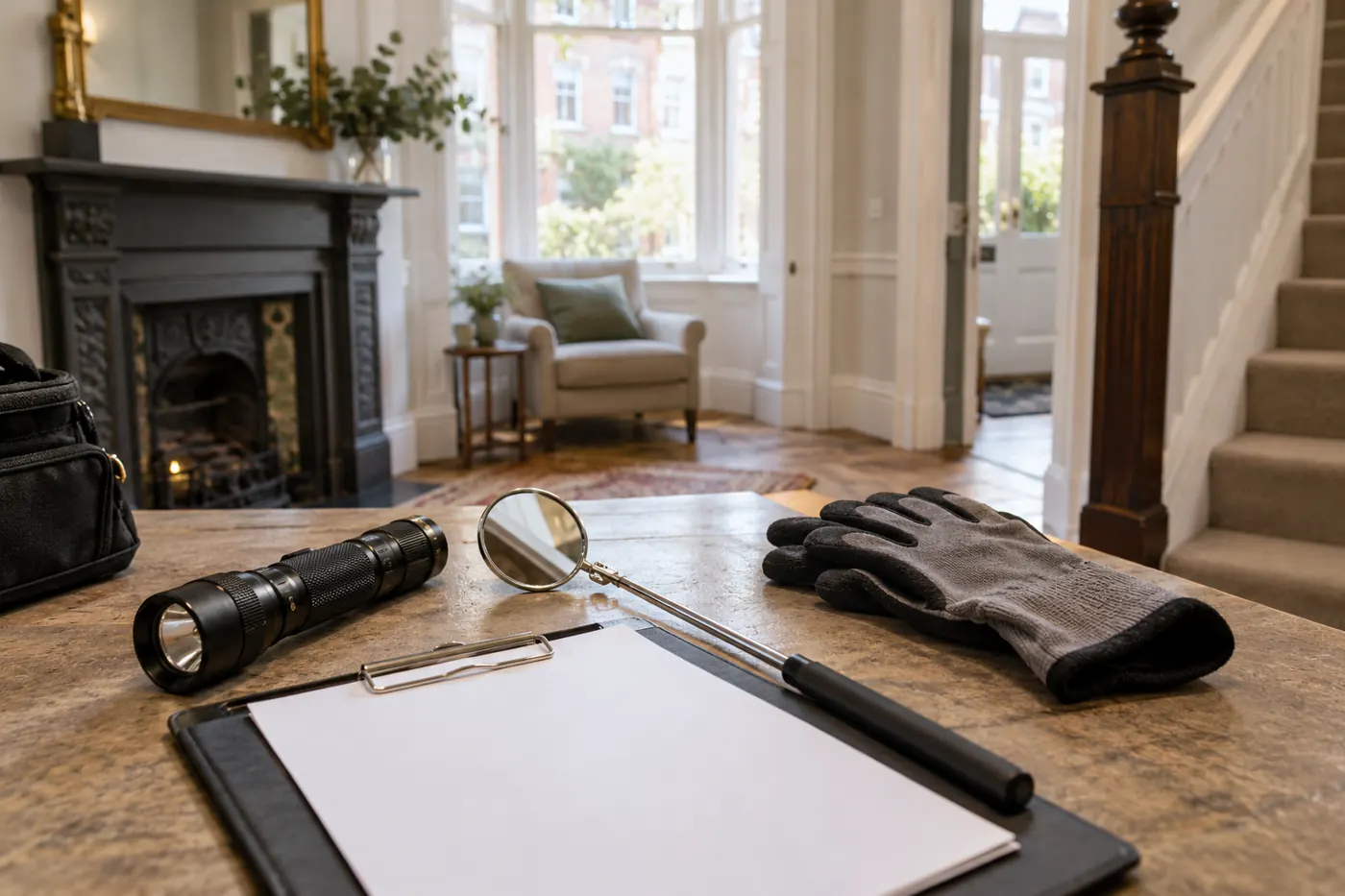

Proofing is most useful when it closes a route that rodents actually use. A hole beside a pipe, a gap below a door and an unprotected vent may all deserve attention, but one photograph cannot tell you which opening explains the droppings in a kitchen. A rodent inspection should connect signs, access and building function before repairs are specified. That sequence helps an owner avoid sealing the wrong place, trapping an animal inside or damaging ventilation and services.
Begin with a map of evidence
Tell the inspector where and when signs appeared: droppings, gnaw marks, sounds, sightings and damaged food packaging. Keep dates separate. Fresh material after an area has been cleaned and monitored says more about current activity than an undated discovery behind a cupboard. Photograph each location from a distance that shows the surrounding room, then record a close view if safe. Do not move electrical equipment or reach into a hidden void to obtain a better image.
Ask the inspector to distinguish confirmed findings from possibilities. A dropping may support rodent activity without proving whether it came from a rat or mouse. A stain beside a pipe may be unrelated. The BPCA rodent control guidance calls for a site survey that establishes the type, level and extent of activity and records food, water and building defects. A useful report should make that reasoning visible to the property owner.
Trace movement through the building

The nearest gap to a dropping is not necessarily an entry point. A rodent may travel behind fitted units, along a service run or through a shared void before appearing in the occupied room. The inspection should look at likely travel edges, internal penetrations and the building exterior where access is safe. In a terrace or converted house, the route may cross a boundary or involve a drain or communal riser. Record inaccessible areas so a later visit can address them.
Ask for photographs or a simple sketch showing each proposed route. Which sign connects the inside location to an outside opening? Is there a repeated track, fresh gnawing or monitoring result? BPCA’s discussion of tracking methods explains how monitoring can help identify movement and entry or exit points. The inspector should choose appropriate methods; an owner should not scatter powder or bait to create evidence independently.
In a shared building, label the spaces on the sketch with their access owner. A kitchen cupboard may be within one flat, while the pipe chase behind it belongs to a managing agent and the outside wall is reached through another garden. Ask which keys, permissions or safe access equipment will be needed to complete the route check. If access is refused or delayed, the report should identify the missing observation rather than state that the visible gap is proven. This prevents a contractor from repairing only the part that was easiest to reach.
Check whether activity is current
An old gap can remain after a previous problem has ended. Conversely, a cleaned room can show new signs within days. Ask how the survey will establish present activity and what follow up will confirm the result. This may involve dated observations, inspections of accessible spaces or professional monitoring. Do not claim that every opening is active merely because it is large enough for a rodent. A repair plan can include sensible preventive work, but it should label prevention separately from treatment of a confirmed route.
The BPCA guidance on mouse infestations warns that proofing without accounting for an active population inside can fail. This is why timing matters. Ask whether control, clearance or monitoring is needed before a particular gap is closed. Where the species or extent is uncertain, the plan should state that uncertainty and identify what evidence would resolve it.
Record food, water and shelter
Proofing alone may be undermined by accessible food and sheltered routes. The inspector should note unsecured refuse, pet food, spilled bird seed, leaks, clutter and vegetation near the structure where relevant. These observations should be specific and proportionate. A general instruction to keep everything clean is less useful than identifying one overflowing bin or a particular leaking pipe. Addressing attractants does not replace entry repairs, but it helps make the repair durable.
For commercial properties, ask whether deliveries, waste storage or equipment create repeated access opportunities. A door that is routinely left open may need an operational change as well as a physical barrier. Residents or staff should know who will maintain any new proofing and report damage. The report should distinguish work the owner can arrange from tasks requiring a qualified trade or a neighbour’s permission.
Specify repairs that preserve building function
The inspector should describe exactly what is to be repaired, where, with what type of approach and by whom. A mesh barrier, door brush or sealed service penetration must suit the material and remain maintainable. BPCA’s fundamentals of pest proofing emphasises a site specific survey and cautions that the wrong material in the wrong place can cause damage or even fire risk. Do not fill an airbrick, block drainage or pack material around electrical services as a casual fix.
If a drain defect is suspected, ask how it will be assessed by a suitable drainage specialist. If the route runs beside wiring, ask an electrician to advise on safe access. Proofing does not authorise a pest contractor to alter an electrical installation. The pest proofing service can help translate identified access points into an exclusion plan, while rat control or mouse control can address the species and activity confirmed by inspection.
Agree how success will be checked
Before work begins, ask for a baseline: the locations of signs, proposed route, photographs and any monitoring results. After treatment or repair, revisit those same locations at an agreed time. New droppings, fresh gnawing or repeated sightings need investigation rather than another automatic application of filler. If no signs return, keep the proofing accessible for inspection and repair. A written record helps a future owner or managing agent understand what was done.
Ask who will inspect the completed repair itself. A sealed pipe opening may look sound from the room but remain open on the outside, and a door brush may wear quickly in a busy entrance. The pest professional can check for renewed movement; the relevant building trade can confirm that ventilation, drainage and services still work. Record the date and any limits of the post-work visit. A plan with no follow up leaves the owner unable to tell whether activity stopped because the route was closed or because rodents moved elsewhere. That distinction matters when future repairs are requested again.
The general property rodent guide covers broad prevention. The inspection before proofing has a narrower purpose: establish what is happening in this building, identify the route and choose the order of control and repair. Ask for that evidence before accepting a list of gaps as the whole answer.