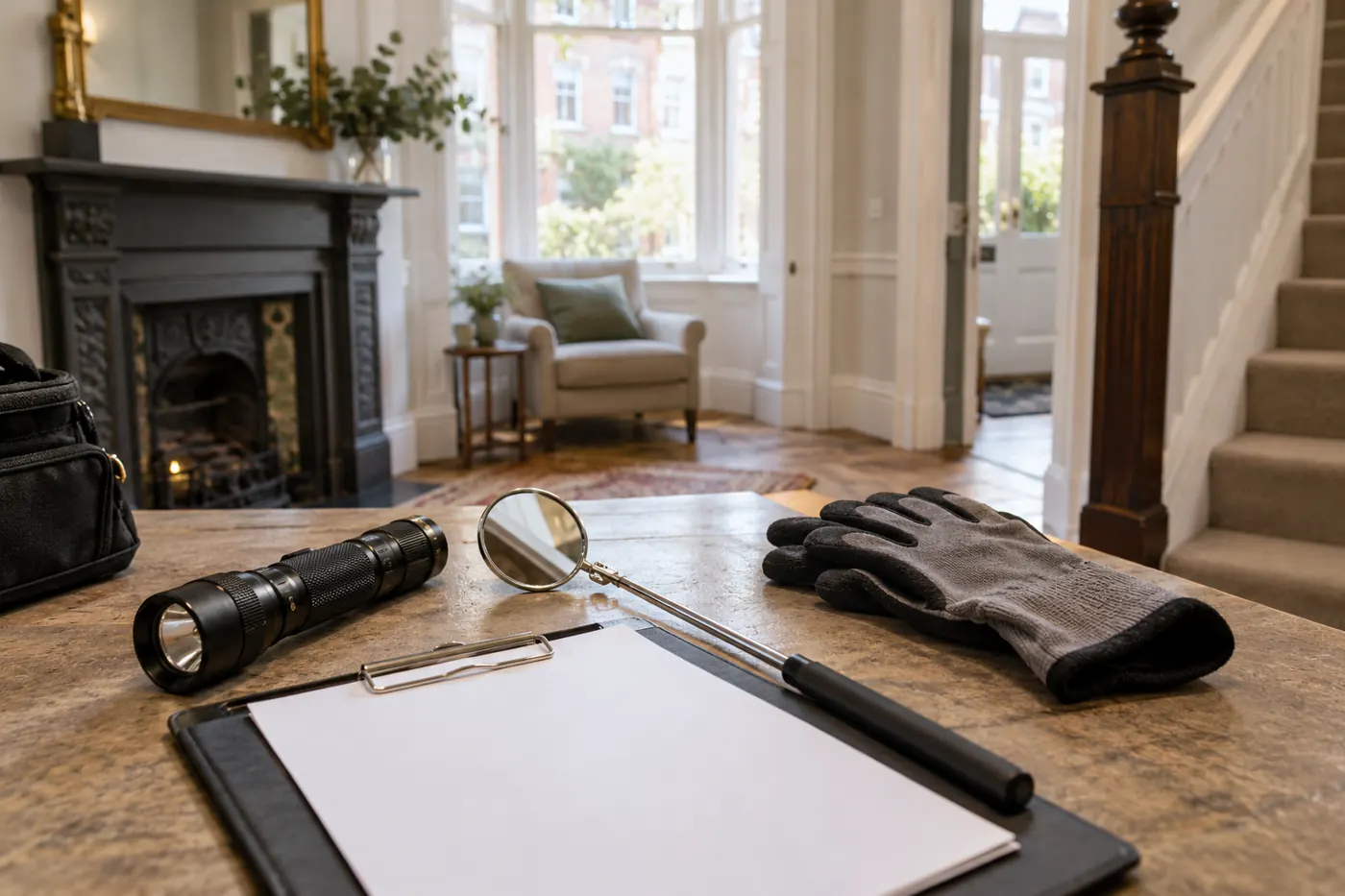

Scratching above a room can suggest rodents, but a concealed ceiling void is not a place to investigate by pulling down a panel on impulse. The space may contain wiring, pipework, insulation and materials that should not be disturbed. A landlord or homeowner needs a plan that records the evidence, establishes safe access and allows an inspector to connect signs with an entry route. The aim is to learn what is happening without creating a second building problem.
Record what can be observed below
Write down the room, time and duration of each noise. Note whether it is concentrated near a light fitting, a service riser, an exterior wall or a shared corridor. Sound travels through joists, so the apparent position may be misleading. Ask occupants to record observations separately and date them. A short audio clip may help describe the pattern, but it cannot identify rats or mice on its own.
Look for visible marks without moving ceiling material. A stain, loose tile, small gap around a service pipe or droppings below an opening can be photographed safely from the room. Record any damaged food packaging or signs in nearby cupboards. Do not treat every dark speck as a dropping; material may have fallen during maintenance. A wider photograph showing the ceiling and room position gives context for a close image.
If there is water leakage, exposed wiring, a sagging panel or a strong odour, restrict the area and contact the relevant building professional promptly. Do not place a ladder under an unstable section or let occupants pull at a light fitting to see above it. A pest investigation can be coordinated with electrical or maintenance checks where the evidence requires both.
Identify the access route before opening anything
Find the building plan, previous maintenance notes and any record of roof, plumbing or electrical work. Is there an existing hatch, a removable panel designed for access or a neighbouring loft space? A ceiling void may continue across rooms, flats or service risers. The owner of one room may not control every part of the space. Agree access with the managing agent or adjoining occupier before the visit.
The British Pest Control Association’s site risk guidance notes that suspended ceiling voids can provide pest harbourage and permit activity to go unnoticed. That is a reason for a planned survey, not proof that the sound is a rodent. An inspector should state what can be examined safely, which areas remain inaccessible and what further access would require.
For some buildings, old materials create another concern. The Health and Safety Executive’s survey guidance includes spaces above false ceilings among locations that may need assessment for asbestos before maintenance disturbance. Do not assume a particular ceiling contains asbestos, but check the building’s records and ask a competent person to advise if its age or material raises concern. A pest technician should not be expected to break through an unknown panel.
Plan a useful first visit
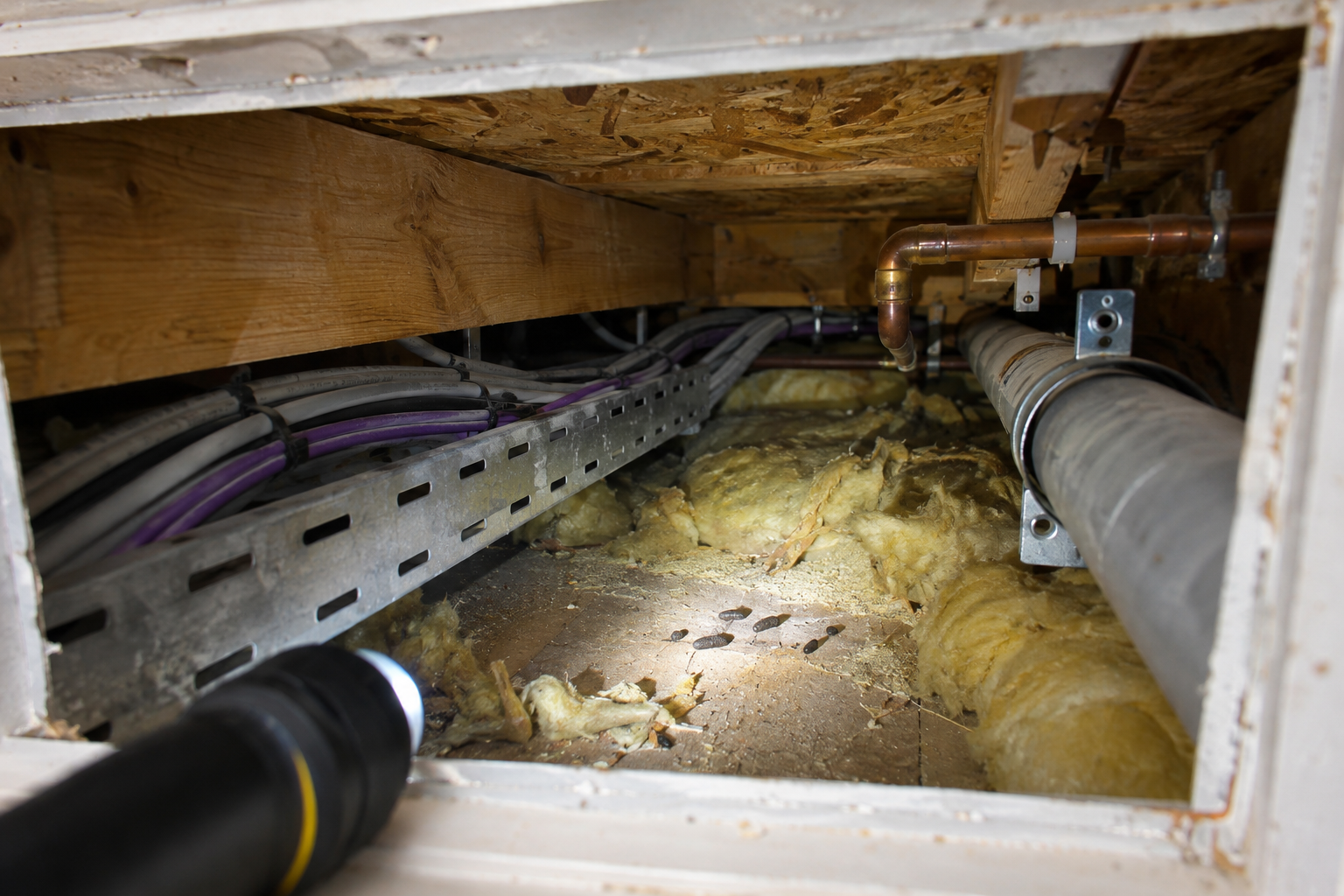
Give the inspector a timeline of noises, room names, photographs and the location of existing hatches. Explain any constraints such as occupied rooms, fragile ceilings, restricted service cupboards or shared areas. Ask whether the survey will include the rooms below, accessible void sections and outside entry possibilities. If an electrical risk is suspected, arrange the right trade and decide who will make the area safe before pest access.
At an existing safe opening, an inspector may look for droppings, gnawing, nesting material, displaced insulation and repeated travel marks. The location and freshness of signs matter more than a single sound. They may need a torch, camera or monitoring method where direct sight is limited. Ask for a marked plan showing where evidence was found, not just a statement that something is in the ceiling.
Agree who can move stored items below the hatch and when the room will be available. Clear a safe working area without shifting ceiling panels or touching suspect debris. If the inspection needs access through a tenant’s room, give reasonable notice and explain what the visit involves. Record any refusal or unavailable room so the report does not silently treat an uninspected area as clear.
Do not vacuum dry droppings, reach into a void or disturb a nest to provide a sample. Keep people and pets away from any material that falls into an occupied room. Where a room is used for food preparation or by a vulnerable occupant, explain that context when booking the visit so cleaning and temporary use can be planned.
Connect the void to the building
The source might be a gap at the roof edge, a service penetration, an adjoining void or a defect lower down. An inspector should compare signs in the ceiling with evidence at the exterior, loft, kitchen or riser. A route needs to be demonstrated before anyone seals a hole. Blocking an active opening could leave an animal inside or redirect movement into another room.
A rat control survey or mouse control survey can help determine the species and appropriate treatment. Pest proofing becomes useful when the entry point and building repair are clear. If the suspected route involves a drain, roof or shared structural element, the relevant specialist or owner may also need to act. Pest treatment alone cannot repair a damaged service route.
In a converted terrace or block of flats, keep reports from each room separate. One resident may hear movement over a bedroom while another sees a mark near a shared cupboard. Those observations may relate to the same route, or they may not. A managing agent can coordinate access and distribute a factual report without assigning blame to a neighbour.
Agree the follow up before reopening
Ask the inspector to record what was inspected, what could not be accessed, the proposed treatment, monitoring locations and any building work needed. Note who will remove equipment and who will check it. If a ceiling panel was opened by an appropriate contractor, document how it will be closed and how the room will be cleaned. An unfinished access opening can create another route or maintenance problem.
Ask how the contractor will distinguish new evidence from old material left in a hidden space. A monitoring point can be more informative than repeated opening of the ceiling. Assign one person to track repairs.
Keep a dated log after the visit. A new noise in a previously quiet room, fresh droppings below a cleaned opening or damage to wiring deserves prompt follow up. A quieter night by itself does not prove control is complete. Compare the observations with the agreed monitoring period and ask for a final explanation connecting evidence, action and repair.
The broad rodent prevention guide covers everyday measures. A ceiling void needs a narrower plan: safe access, cooperation between building trades and proof that the route has been addressed. Careful preparation helps the first inspection answer the right question without creating avoidable damage.