
Hearing scratching above a bedroom can make every movement sound like a rat. A loft noise, however, is only a starting point. Mice, rats and squirrels can all use roof spaces, while loose materials, birds or building movement can create misleading sounds. The useful question is not which animal a recording resembles. It is what physical evidence appears in the loft, when the noise occurs and how an animal might reach that space.
Record the pattern before investigating
Write down the time, room and duration of each episode. Was it a brief scrape near the eaves, repeated movement across the ceiling, or a heavier thump close to the hatch? Note whether you heard it during daylight or after dark. This pattern can guide an inspection, but it cannot confirm a species. Sound travels through joists and ceiling voids, so the apparent position may be several metres from its source.
Ask other occupants whether they heard the same event from a different room. Keep separate notes rather than merging every report into one assumed route. If possible, capture a short recording without entering the loft. Include the date and location when you share it with an inspector. A recording is supplementary evidence; a photograph of droppings, damaged material or an access gap is usually more useful for deciding what to inspect next.
Avoid repeated night visits to the hatch. A quiet interval does not show that an animal has gone, and opening the loft may disturb evidence before anyone has assessed it. If the sound happens again, update the same timeline. Consistent observations can be more informative than one hurried search after a single noise.
Look safely from the hatch
Before opening the hatch, check whether access is stable and whether you can see an obvious walking surface. Many lofts contain exposed joists with fragile ceiling material between them. Do not step onto insulation or plasterboard, reach into a dark corner, or disturb wiring to pursue a noise. If the hatch is difficult to reach, the loft is cluttered, or you suspect damaged electrics, leave the examination to a suitable professional.
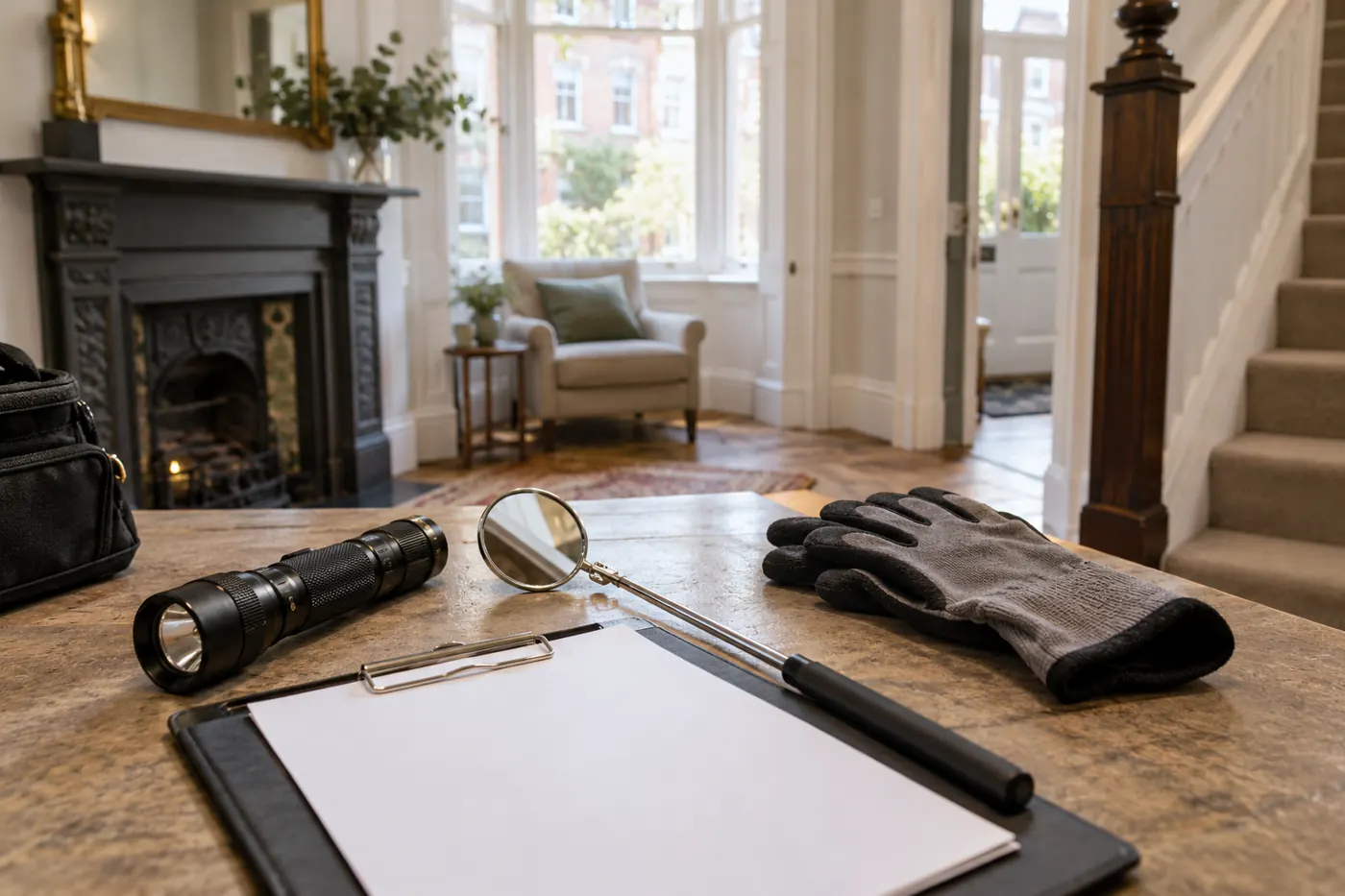
From a safe position, use a torch to look for droppings, gnaw marks, displaced insulation, nesting material and stains. The British Pest Control Association’s loft advice identifies old nests, droppings and gnawing as signs worth checking. Photograph any visible mark before moving stored boxes. Include a wider image showing its position relative to the hatch, eaves or chimney, then a closer image if you can take one safely.
Do not sweep dry droppings, handle a nest or pull apart insulation simply to obtain a clearer picture. Mark the location on a quick sketch. If you cannot see the suspected area from the hatch, record that limitation; an inspection can include access equipment and a safer method.
Compare clues, not just noises

A light rustle does not prove mice, and a loud bang does not prove rats. The ceiling construction, stored objects and distance from the sound all change what you hear. Dropping size and shape can narrow possibilities, but photographs without scale are easy to misread. Place a ruler beside material only if you can do so without contact or unsafe movement. Never identify an animal solely from one pellet or one audio clip.
Consider the whole cluster of evidence. Repeated droppings near a service penetration may suggest travel along an internal route. Disturbed insulation near the roof edge and a visible opening may point elsewhere. Squirrels are another possibility in roof spaces; BPCA notes that scratching and rustling can accompany their activity. Birds may leave feathers or material around a roof opening. If different signs appear in separate areas, do not assume they all came from the same visitor.
Check the outside without climbing
Walk around the property at ground level in daylight. Look for an obvious gap at the eaves, missing roof material, an opening beside a pipe, or branches touching the roof. Photograph the relevant side of the building and tell the inspector which rooms lie beneath it. Do not climb a ladder, enter a roof void from outside or attempt a repair at height. On a terrace or converted house, access may involve a shared roof line, adjoining space or service run.
An opening is not proof that an animal used it. The route needs to match the evidence inside. Also avoid sealing a possible active entrance immediately. An animal may still be inside, and a blocked route can create further damage or leave an inaccessible carcass. Ventilation and roof drainage must remain functional. The right proofing measure depends on the identified route and the building detail.
Prepare for an effective inspection
Give the inspector a concise timeline: first noise, usual times, rooms affected and any changes. Share photographs of droppings, damage and suspected openings, plus your notes on what could not be examined safely. Mention recent roof work, a known leak, stored food or repeated problems in adjoining properties. These details help distinguish an active issue from old signs and identify where access is needed.
Ask what the inspection will include: loft, roof edge from a safe position, service penetrations and any connected voids. Ask how the suspected species will be confirmed before treatment or proofing is proposed. For suspected rodents, the company’s rat control and mouse control services explain the available survey and treatment routes. Pest proofing is relevant once the entry point and repair method are clear.
If you rent or share the roof space, tell the landlord or managing agent promptly and send dated observations. An inspection may require permission to reach a communal loft or adjoining area. Agree who will receive the findings and arrange repairs. A tenant should not be expected to identify an animal by sound or carry out work at roof level.
Keep the response proportionate
Treat damaged wiring, a strong smell, extensive contamination or a visible animal as a reason to seek prompt professional help. Keep people and pets away from affected access points. Do not scatter bait in a loft or place a trap where it cannot be checked. A treatment plan must account for the species, access, occupants and follow up; it is not a substitute for finding the route.
If the inspection finds no animal evidence, revisit the noise record rather than forcing a pest explanation. A loose vent, moving branch or building component may need a different trade. If evidence is present, ask for a written explanation connecting the signs to the proposed action. The broad rat and mouse prevention guide covers general measures; this loft check focuses on identifying the source of a particular sound before acting.
The best first response is calm documentation. A timeline, safe photographs and a clear account of access points give an inspector something testable. They also prevent a guess made in the middle of the night from becoming the basis for an unnecessary or ineffective repair.