

A small dark mark on a sheet can trigger a search for bed bugs, especially after a night of itching. The mark deserves attention, but its colour alone cannot identify the cause. Blood spots, dark faecal marks, shed skins and live insects have different evidential value. A careful inspection records where each sign appeared and looks for a pattern around the bed. It does not turn one stain or one skin reaction into a confirmed infestation.
Start with the bedding as found
Before washing the sheet, photograph the whole bed and the position of the mark. Take a closer image with a familiar object for scale if that can be done without smearing it. Note the date, whether the bedding was freshly changed, and where someone slept. If there are several spots, record whether they form a cluster or appear across different parts of the fabric. A stain transferred from a cut, a crushed insect or another source may look similar in a small photograph.
Do not spread suspect linen through other rooms to show someone. Place it in a closed bag if it must be moved for laundering or inspection. Avoid spraying chemicals onto the bed or discarding the mattress before the evidence has been assessed. Both actions can complicate inspection and may leave the underlying problem unresolved.
Compare marks with recognized signs
The NHS bedbug guidance lists blood spots on bedding and small brown spots on bedding or furniture among possible signs. The British Pest Control Association describes dark faecal spots, blood smears, moult skins and live insects around a sleeping area. These are clues to investigate, not a guarantee that every brown dot came from a bed bug. The location and presence of other signs matter.
Check whether the mark is on the sheet surface, along a seam, beneath the mattress edge or on the bed frame. Several tiny dark spots close to a crevice can carry more weight than one isolated mark on a pillowcase. A pale skin-like fragment may be worth photographing, but lint and other insect remains can be confusing. Preserve an intact specimen in a secure container if you find one; do not crush it before identification.
Avoid trying to name a mark from a phone image alone. A photograph taken at an angle may also make a tiny speck look much larger. Include both close and wider views, keep the original file, and tell the inspector if the mark was wet, dry or transferred when the linen was moved.
Inspect the bed methodically
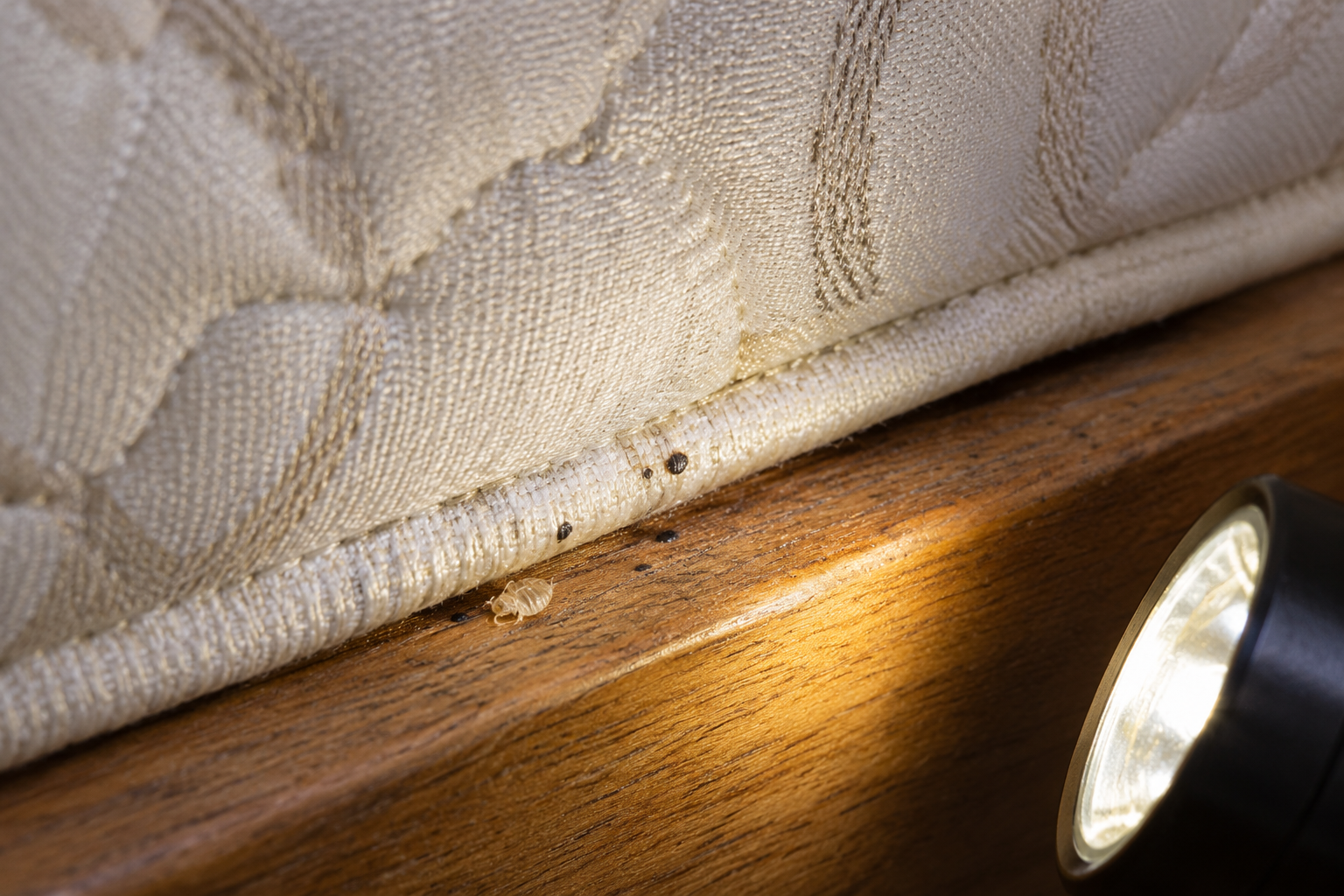
Use a torch to check the mattress seams, piping, labels, bed frame joints and headboard. Work one section at a time so you know where any sign was found. Take a wide image showing the part of the bed, then a close image. Look for live insects, cast skins and clusters of dark marks in sheltered places. Do not dismantle heavy furniture or reach into electrical fittings. An inspector can examine areas that are difficult or unsafe to access.
Check nearby bedside furniture and the wall immediately behind the bed if accessible. Bed bugs may hide away from the sheet itself, so a clean-looking surface does not settle the question. Conversely, a stain on bedding with no other evidence after a careful check remains uncertain. Record that uncertainty rather than claiming a negative or positive identification from one glance.
Treat skin reactions separately
Itchy marks on skin may increase concern, but they are not a reliable way to identify bed bugs. The BPCA warns that bites alone do not necessarily mean an infestation. Other insects, irritation and medical conditions can cause reactions. Do not diagnose a pest species from a photograph of a rash. If bites are painful, swollen or worsening, follow NHS advice about seeking medical help.
Keep a simple record of when symptoms appeared and where the person slept, but avoid using that record as proof that the bedroom contains bed bugs. A pest inspector needs physical evidence from the room. If different people react differently, that difference does not confirm or rule out an infestation.
Preserve evidence without spreading it
If a live insect is found, capture it in a closed, labelled container or take a clear photograph that shows size and shape. Record the exact location and time. Avoid carrying open bedding into another room. Follow suitable laundering advice for items that need cleaning, and keep treated and untreated items separate. Do not assume that washing one sheet resolves an infestation if signs remain in a bed frame or adjacent furniture.
If you rent, send dated photographs and a concise account to the landlord or managing agent. Explain what was seen and what remains uncertain. An inspection may need access to adjoining rooms or units. Avoid accusing a neighbour or visitor of introducing the insects; the signs on a sheet cannot establish where they came from.
For a hotel or serviced building, commercial pest control can coordinate inspection across affected rooms and shared areas.
If you have recently travelled or brought secondhand furniture home, make a note of the dates and items without treating them as an established source. That history may help the inspector decide what to check, but bed bugs cannot be traced to a person from a stain. Keep luggage or furniture in place until you have practical advice on safe handling and inspection.
Know when to call for identification
Seek a professional inspection if you find a suspected insect, repeated clusters of marks, shed skins or signs in more than one sleeping area. Ask what the technician will inspect and how the identification will be made. Bed bug control in London can assess the evidence and explain preparation and treatment options. If the signs point to another pest, the plan should change accordingly. Do not accept a treatment recommendation based solely on a skin photograph.
Ask how findings will be documented, which rooms need checking and what follow-up is expected. A useful report separates confirmed insects from suspected marks. It should also state whether preparation is needed before any treatment. The existing bed bug prevention guide covers general precautions; this article is about interpreting a particular mark and deciding whether it warrants inspection.
Recheck the same places
After an inspection or an agreed cleaning step, keep a dated record of any new marks in the same locations. Photograph them under similar light, and note whether bedding was changed in between. Do not repeatedly move the bed and nearby furniture without a plan; movement can make comparisons harder. If no insect evidence is found, consider other explanations for the marks and seek suitable advice for persistent skin symptoms.
The strongest conclusion comes from a group of consistent signs, ideally including an identified insect, rather than a single stain. Calm documentation protects the evidence and helps avoid unnecessary treatment. It also makes it easier to act promptly when a genuine infestation is confirmed.