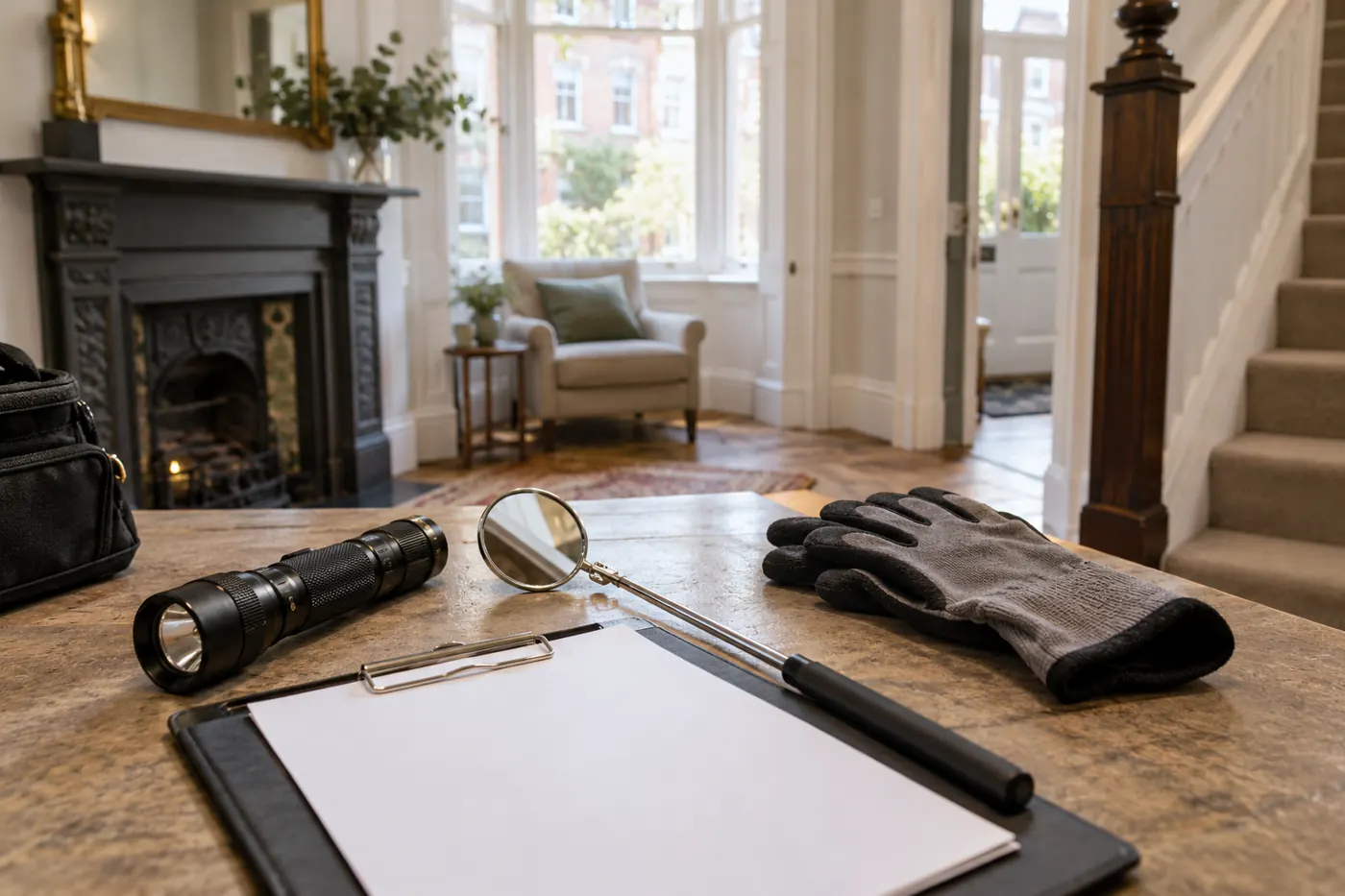

A suspected bed bug problem can make people want to strip the room immediately. For an inspection, the more useful first step is to preserve the evidence and make the bed and nearby furniture accessible. Bites alone do not identify the insect. A careful survey needs to see where you sleep, where belongings have been kept and what signs appeared. Ask the pest professional what preparation they want before moving bedding, bags or furniture between rooms.
Record what brought the concern to light
Write down when bites or marks were first noticed, which room was used and whether anyone has seen an insect. Photograph a specimen or dark spots on a bed frame if you can do so without spreading material. Save a found insect in a closed clear container if it is safe to collect; otherwise a clear photograph is enough to start a conversation. Do not label every skin mark as a bed bug bite. Other causes can look similar, and the inspector needs evidence in the room.
The NHS description of bed bug signs includes small brown spots on furniture or bedding, blood spots on sheets and insects around sleeping areas. It also notes that bed bugs can hide in frames, mattresses, furniture, clothing and behind pictures or loose wallpaper. Mark each suspected location separately. A brief timeline helps the inspector decide which rooms and furnishings to examine without relying solely on bite patterns.
Make the bed reachable, without dismantling it
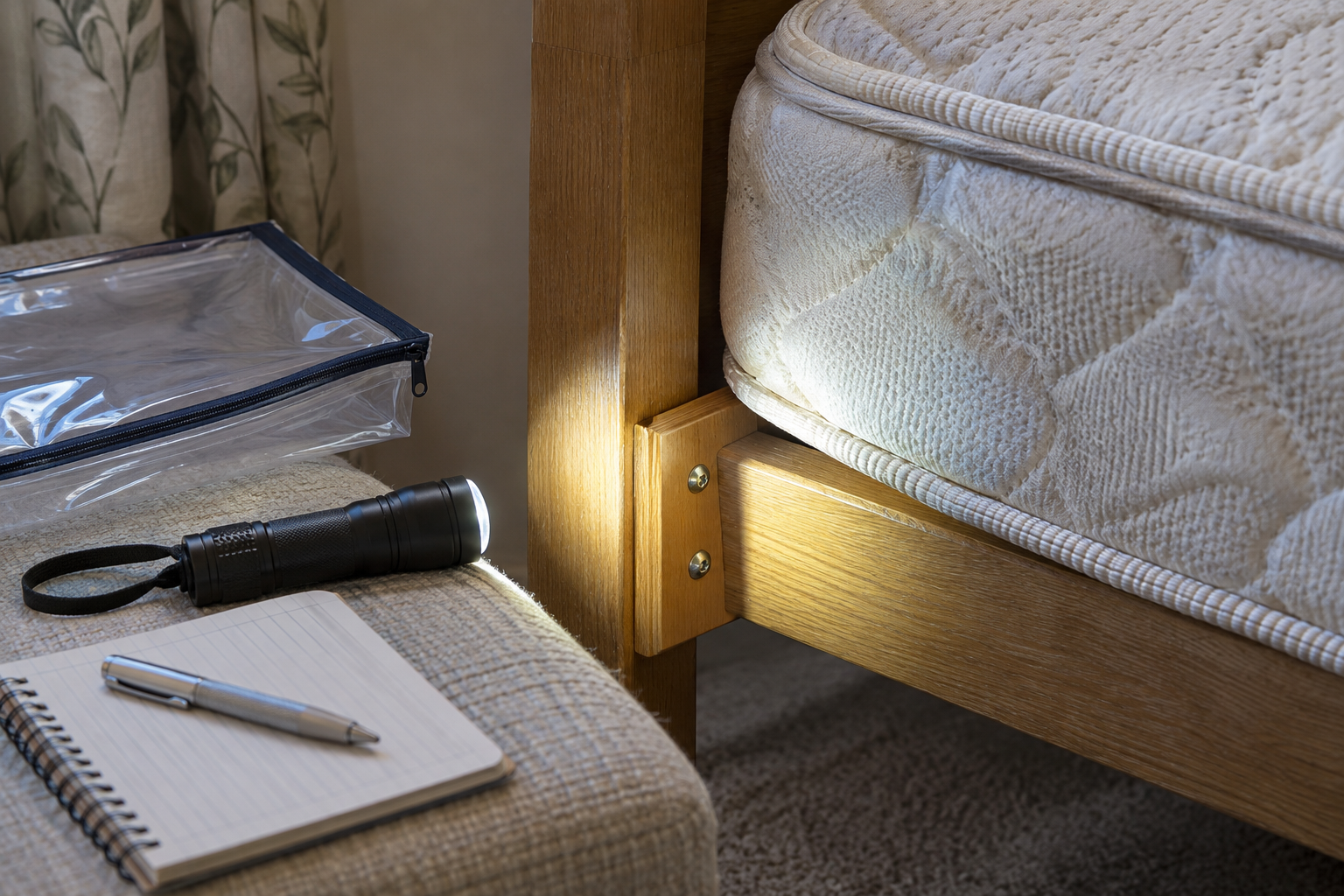
Clear a safe walking route to the bed and bedside furniture. Remove ordinary trip hazards from the floor, but keep potentially affected items in the room until the inspector advises how to handle them. Do not carry a suspected pillow, duvet or suitcase into another bedroom to create space. If the bed cannot be moved because it is heavy, built in or near fragile wiring, tell the company in advance. They can explain the access needed for the survey.
Show the inspector both sides of the bed if possible. The frame joints, headboard, mattress seams and nearby skirting may need examination. Do not remove a mattress cover or take apart a frame unless asked. A useful inspection begins with the original arrangement of the room. If you have already moved furniture or changed bedding, say when and where the items went. That history can be more useful than an apparently tidy room with no visible signs.
Keep belongings contained and identifiable
Set aside a small area for items you need daily, and explain where they were stored. Do not empty every drawer onto the bed or shake clothes across the room. If the company requests bagging, use the method and labels it specifies. Keep bags closed during transport and avoid mixing belongings from the suspected room with clean items. Do not assume that simply sealing a bag is a completed treatment. The correct handling depends on the contents and the plan agreed after inspection.
The BPCA code of best practice for bed bug management calls for a thorough survey before treatment and lists potential preparation such as moving items from wall junctions and bagging bedding or clothing when agreed. Those are pre-treatment steps, not a universal instruction to empty a bedroom before the first visit. Ask exactly which tasks apply to your property and who will perform them.
Identify rooms and travel history accurately
Tell the inspector where people have slept recently, including sofas or a guest room, and whether luggage or second hand furniture entered the home. Mention a recent trip only as context, not proof of origin. In a flat or shared house, explain which rooms are yours and which require another occupant’s permission. Avoid moving everyone into a different room as an improvised response. Discuss sleeping arrangements with the pest professional so the survey and any later treatment account for actual use.
If a child, older person or someone with mobility needs uses the bedroom, say what access and timing will be practical. Pets, medical equipment and delicate belongings may also affect preparation. The company should explain what it can inspect safely and whether anything must be moved by the household beforehand. If access is limited, note that openly instead of presenting a partial room as fully checked.
Before booking, ask whether the visit is an inspection only or also includes a treatment decision. Ask how long access is required and whether someone who knows the room must be present. If the property is rented, provide the landlord or managing agent with the same dated evidence and arrange entry to rooms under their control. Keep medical details out of a general building notice; only practical access and safety information should be shared with the relevant professional. Clear expectations make it less likely that belongings are moved twice.
Ask what the inspection will decide
Ask how the suspected insect will be identified, what rooms will be surveyed and what happens if no bed bug evidence is found. The BPCA code says insect identification is critical and advises against pesticide use where evidence cannot be located, while monitoring may still be considered. This avoids a treatment based only on a photograph of a bite. Ask for the findings in writing, including where signs were found and what preparation would be required for a proposed treatment.
The bed bug control service can discuss a survey and treatment plan for a London home. For a hotel, serviced flat or business with multiple rooms, commercial pest control is the relevant coordination route. In either setting, ask about access, follow up and any instructions for belongings before the first appointment. Do not infer from an advertisement that a specific method is right for your room without a survey.
Avoid steps that erase or spread evidence
Do not spray over the bed, use an unplanned fogger, discard a mattress or move furniture into a communal corridor before the inspection. Those actions can complicate identification, affect other rooms or create a disposal problem. If you have already used a product, tell the inspector its name and when it was applied. Keep the packaging available. Cleaning and laundry may have a place in a later plan, but the timing should be agreed with the person assessing the infestation.
If distress about bites is affecting sleep, the NHS advice above explains when to seek help for symptoms. The inspection itself remains a separate task: establish whether bed bugs are present and where. The general prevention article covers broader ways to reduce introductions. This preparation guide focuses on helping a professional examine the current bedroom without losing the clues.
Before the visit, send a concise note with the timeline, room list, photographs and any access restrictions. Ask what to leave in place and what to move. A prepared bedroom is one the inspector can examine accurately, with the original evidence still available and the people who use it able to follow the next plan.